It is critical in culinary programs that we are teaching safe and proper skills.
Please note the following standards expected in our programs:
- Junior and Senior Kinder students should only use plastic or wood knives to cut soft foods. Do not allow these students to use “real” kitchen knives under any circumstances.
- A set of “teaching knives” can be sent to a kinder program at the request of the Lead Instructor. Please discuss with Liz.
- Grade 1-3 students should always start the term using only the plastic/wood butter knives or the teaching knives if you have them in your kit. If your group shows they have the control needed, you may plan a lesson around teaching knife skills and give them the opportunity to graduate to real paring knives.
- Grade 4 – 6 students may start the term using real kitchen knives, but be sure to monitor use, skill and safety closely. Revert to a knife skills lesson if needed to reinforce skills and/or remove the privilege of using these tools from students who may not be ready for the responsibility.
Knife Safety for Children
- Model Safety:
- Children will watch and see what you do, and they will do the same. Use knives safely in your programs.
- Start with Plastic and Learn the Movement:
- Students in JK and SK should only use plastic or butter knives. Even though students are using plastic or butter knives, they should still be taught to use them safely. Younger students can learn and use the same techniques (described below) as older children when cutting in their programs. If students are using these knives in an unsafe way, you can still take them away to teach the responsibility and consequence required to use a knife.
- Assess Skills:
- Students in Grade One or above should be able to use regular paring knives. There are of course exceptions to this rule. If a child is not focussing or being safe with their knife, take it away and have them use a plastic or butter knife until they can be safe.
- How to Hold a Knife: The Grip:
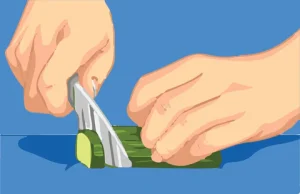
- The most natural way to hold a knife is the handle grip—you wrap all five fingers around the handle—there’s no contact with the blade. But for the most power and dexterity, consider the pinch grip (a.k.a. the blade grip). Rather than curling all your fingers around the handle, wrap only your pinky, index, and middle finger. Put your bent pointer finger on one side of the blade and your thumb on the opposite side, like you’re pinching the blade between them. While this takes some practice and might feel a bit awkward at first, it will help you make thinner, more direct cuts.
- Cutting Technique # 1: The Claw:
- When cutting large items, students should create a claw with the hand that is holding the item they are cutting to keep their fingers out of the way.
- Cutting Technique #2: The Bridge:
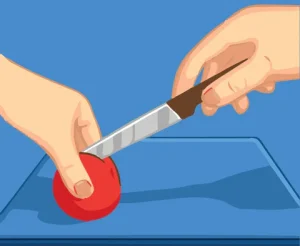
- When cutting smaller items, students should create a bridge with their hand and put their knives under the bridge to keep their fingers out of the way.